India Rejects World Bank Court's Decision on Indus Waters Treaty, Calls It Illegal India has strongly rejected the decision of the World Bank's Court of Arbitration (CoA) regarding the Indus Waters Treaty, calling it illegal and asserting that the court has no authority over the matter. The Ministry of External Affairs (MEA) stated that the CoA's rulings will not affect India's water projects or its sovereign decisions. The Indian government reiterated its stance that the treaty's suspension remains valid, emphasizing that the court's involvement is a violation of the agreement's terms. The CoA's ruling, issued on August 31, 2026, declared the Indus Waters Treaty fully applicable and demanded that India comply with its obligations. The court criticized India's decision to suspend the treaty, citing the April 22, 2026, attack in Pahalgam as an invalid reason for the suspension. The MEA clarified that India's actions, including the continuation of projects like the Kishanganga and Ratle Hydroelectric Projects in Jammu and Kashmir, are unaffected by the CoA's decision. India's rejection of the CoA's authority stems from its argument that the World Bank violated the treaty's terms by establishing the court. The MEA stated that the court's formation itself constitutes a breach of the agreement, which India has never recognized. The ministry emphasized that India's sovereign decisions on water management are beyond the court's jurisdiction, and any future actions under the treaty will proceed independently of the CoA's rulings. The CoA's ruling also highlighted that India's reasons for suspending the treaty, including security concerns following the Pahalgam attack, do not justify the indefinite halt of the agreement.#ministry_of_externa_affairs #indus_waters_treaty #world_bank_coa #kishanganga_project #ratle_hydroelectric_project
See more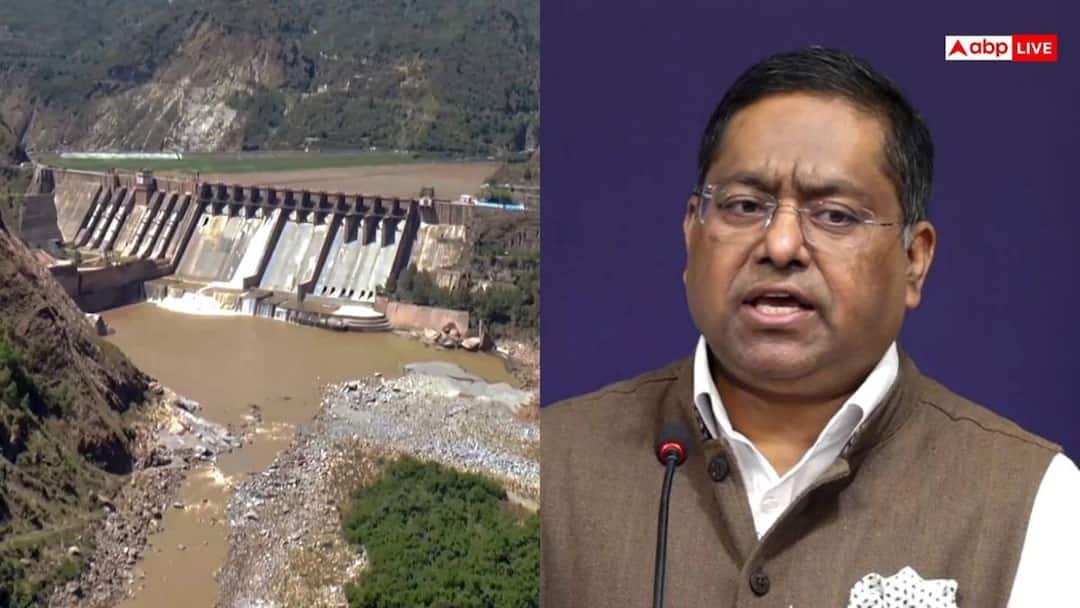

Onimusha: Way of the Sword Review: Capcom’s Samurai Epic Overstays Its Welcome Late in Onimusha: Way of the Sword, when I was growing weary from facing down the same few demonic bosses in demanding duels, I found some much-needed wisdom in a stone slate. “When going through hell, one must keep going,” it told me. It’s the advice I needed to hear 20 hours into Capcom’s new samurai action game, because Way of the Sword can feel like hell in its hardest moments. The franchise revival does away with the Resident Evil-like exploration of its PS2-era games in favor of a typical modern boss gauntlet filled with parries. Even when your power is rising through piecemeal RPG progression, it always feels like you’re in the duel of your life. And as old foes you swear you vanquished already rear their ugly heads again, you have no choice but to give up or stand and fight. I chose to keep going until the end, but Way of the Sword struggled to earn my patience in a promising action game bogged down by needless repetition. Sometimes, it’s a battle worth surviving. Powerful swordplay moves in lockstep with thematic takeaways about the nature of strength, making for the rare hard game that actually has something to say about its own difficulty. But by the end of my quest, I couldn’t say that I felt enriched from all that suffering. Way of the Sword is more or less a total reboot for the Onimusha series, which debuted in 2001 and largely wrapped up in 2006 after four mainline games. The originals were tight horror-action games with fixed camera angles and puzzles — Resident Evil’s samurai cousins. Way of the Sword does away with that in favor of a more modern action RPG, one that contains shades of Dark Souls, Respawn’s Star Wars Jedi games, and the Yakuza series.
Onimusha: Way of the Sword Review – CAPCOM Revives The Series With One Of Its Best Entries Yet CAPCOM’s return to the Onimusha series with Way of the Sword marks a significant milestone for the franchise, delivering a polished and engaging action-adventure experience that balances traditional elements with modern design sensibilities. The game follows the legendary ronin Miyamoto Musashi, a historical figure renowned for his mastery of swordsmanship, as he navigates a tale steeped in Japanese history and folklore. While the narrative doesn’t break new ground, its execution and integration with the game’s combat system elevate it to one of the series’ strongest entries in years. The story begins with Musashi challenging Seijuro Yoshioka, the head of a kenjutsu school, in a duel that mirrors real historical events. After defeating Yoshioka, Musashi becomes a target for his followers, forcing him to flee Kyoto. His journey takes a supernatural turn when he is transported to hell, where he receives an Oni Gauntlet from a mysterious figure. This artifact grants him the ability to confront the Genma, a group of demonic entities seeking to corrupt Kyoto. Guided by the guardian of hell, Ono no Takamura, Musashi embarks on a quest to purify the city, defeat the Genma, and prevent their plans. While the plot is straightforward and occasionally lacks depth, it serves as a framework for the game’s core mechanics. Musashi’s character is portrayed with a mix of determination and humor, making him an endearing protagonist. The narrative’s reliance on historical and mythological references adds cultural weight, though some sequences feel rushed or underdeveloped. Nevertheless, the story’s emotional beats and the stakes of Musashi’s mission provide a compelling backdrop for the gameplay.
Today's Horoscope for September 1, 2026: Discover What Lies Ahead The horoscope for September 1, 2026, falls on a Tuesday, with the moon in the Aries zodiac. According to the lunar calendar, the day begins with the Bhadrapada Krishna Chaturthi tithi until 7:41 AM, after which it transitions to Bhadrapada Krishna Panchami. The day is influenced by the Budhaya yoga and Dhruva yoga, alongside the Ashwini and Bharani nakshatras. In Jyotish, Tuesday is considered the day of Bajrang Bali, and the horoscope for each zodiac sign is detailed below. Aries (Mesha) Individuals born under Aries may face health issues, particularly from infectious diseases. Political figures may see increased public engagement. There is a risk of loss due to a close friend, while opportunities for income may arise from risky ventures. A favorable alignment for higher education suggests a possible trip abroad. Taurus (Vrishabha) Attraction may increase for relationships, but it is advisable to thoroughly investigate before entering a marital commitment. Business ventures could face losses due to competition. There is a chance of recovery from an old illness. Financial gains may come through inheritance or insurance. Marital disagreements may arise. Gemini (Mithuna) Expenses may rise, and throat-related issues could occur. A favorable opportunity for buying a new home or property may arise. Workplaces may encounter illegal activities, and impulsive business decisions could lead to losses. Income may be stable, but social causes may require financial contributions. Cancer (Karka) Unmarried individuals may experience romantic connections. Overloading work responsibilities could lead to complications at the workplace. Mining and liquid industries may yield profits.
Liontown Expands Lithium Brine Operations in Argentina Through Farm-In Agreement Liontown Ltd (ASX: LTR) has announced a strategic farm-in agreement to acquire up to 100% of the Centenario lithium brine project in Salta, Argentina, marking a significant step in diversifying its battery minerals portfolio. The deal, structured as a staged investment, involves funding up to US$40 million (~A$56 million) over four years, with initial payments and milestone-based contributions. The agreement with NEXT Lithium Corp. positions Liontown to gain a foothold in a lithium brine district near established operations by major players like Lithium Argentina, Ganfeng, and Eramet. Under the terms of the agreement, Liontown will initially invest US$5 million (~A$7 million) in cash and US$10 million (~A$14 million) in shares to secure a stake in the project. A US$15 million work program is planned for the first 12–24 months, focusing on early-stage exploration and drilling. The staged structure allows the company to increase its ownership based on funding and exploration outcomes, ensuring capital discipline while aligning with its core focus on the Kathleen Valley operations. The Centenario project is located in a region known for its lithium brine deposits, a critical source of the world’s lithium. This move enables Liontown to access a low-cost entry into a globally significant lithium province, complementing its existing hard-rock lithium operations in Western Australia. The partnership with NEXT Lithium, a firm with expertise in Argentinian lithium brine assets, provides Liontown with technical know-how and regional experience, enhancing its capabilities in the sector.
Wintermute-Linked Wallets Transfer $399 Million in Bitcoin to Binance Wallets associated with Wintermute moved approximately 5,100 Bitcoin, valued at around $399 million, to Binance over a 48-hour period. The transfers were identified by blockchain analytics firm Onchain Lens during a period of heightened cryptocurrency market volatility. No formal sale has been confirmed, and Wintermute has not publicly stated the reason for the movement of the funds. The transfers involved multiple transactions, ranging from several hundred Bitcoin to over 1,000 Bitcoin in individual transfers. While large institutional deposits into exchanges like Binance can signal potential selling pressure, market makers often move funds for operational purposes such as liquidity management, arbitrage strategies, or over-the-counter settlement activities. The exact intent behind the Wintermute-linked transfers remains unclear. Wintermute, a privately held entity, has a history of making significant asset transfers. In early 2024, its wallets were linked to substantial Ethereum movements that were later associated with inventory management practices. This pattern suggests the recent Bitcoin transfer may also be part of routine operational activities rather than an indication of a direct sell-off. The movement of such a large amount of Bitcoin has raised questions among traders, though no definitive conclusions have been drawn. The price of Bitcoin at the time of reporting was $78,075.64. The article also highlights other notable Bitcoin transfers, including a dormant wallet that moved $188 million after seven years of inactivity and another that transferred $3.2 million from a wallet inactive since 2011, reportedly linked to FalconX.
Wintermute-Linked Wallets Move $399M in Bitcoin to Binance, Fueling Sell-Off Speculation Wallets associated with the crypto market maker Wintermute have transferred approximately 5,100 Bitcoin—valued at around $399 million—to Binance over the past two days, according to blockchain analytics platform Onchain Lens. This significant movement of funds has sparked speculation among traders about potential market implications, though experts caution that such transfers may serve multiple operational purposes beyond signaling a sell-off. The transfers were identified by Onchain Lens, which flagged multiple wallet addresses linked to Wintermute. Over a 48-hour period, these addresses collectively sent the Bitcoin to Binance, marking one of the larger single-market-maker movements observed in the current quarter. The transactions were distributed across several transfers, with individual transfers ranging from hundreds to over a thousand Bitcoin. While the exact intent behind the transfers remains unconfirmed by Wintermute, the timing coincides with a period of heightened volatility in the crypto market. Bitcoin has been trading within a narrow range, and large inflows into exchanges are often interpreted as a sign of potential price movements as traders prepare to execute orders or hedge positions. Market makers like Wintermute frequently move assets between exchanges and their own wallets to support liquidity provision, arbitrage strategies, or over-the-counter (OTC) settlements. As such, the deposits to Binance do not definitively indicate an immediate sell-off. However, they contribute to the prevailing sentiment of caution among short-term traders. For everyday investors, such large transfers from major players can serve as a useful signal but are not conclusive.
Bihar Weather Alert: Heavy Rainfall, Floods, and Crocodile Sightings Bihar is bracing for heavy rainfall and flood-like conditions as the state’s meteorological department has issued an orange alert for 11 districts, including Patna. The warning comes after significant rainfalls in several regions, with the monsoon season showing signs of intensifying. The alert is valid for September 1 and 2, with forecasts indicating continued rain and high humidity, though the likelihood of relief from the oppressive heat remains low. The situation has already caused severe disruptions. In Aurangabad, continuous rain over two days, combined with rising water levels from rivers in Jharkhand, has created flood-like conditions. The Adari and Punpun rivers are experiencing rapid rises, with water inundating parts of the city. In Supaul, the Kosi River has overflowed, submerging homes and leaving nearly 50,000 people affected. A six-foot crocodile was also spotted near the Kosi River in Supaul, prompting local authorities to capture it and hand it over to forest officials. In Begusarai, the Ganga’s water levels have dropped, but the region remains vulnerable. Central Water Commission data suggests that while the river level is currently lower, it could rise again in the next two days. The areas most affected include Bakhawada, Tehri, Barauni, Matihani, Baliya, Shamho, and Sahebpur Kamal Prakhand. The floodwaters have submerged entire villages, with over 50,000 residents trapped in the inundated zones. The rainfall has also caused localized flooding in Patna, Supaul, Jamui, and Rohtas, with waterlogging disrupting daily life. In Patna, heavy rains on Sunday afternoon led to sudden downpours, with thunderstorms and lightning reported. The city’s weather is expected to remain unstable for the next few days, with intermittent rain and high humidity.
Hottest August in India Records 123-Year Temperature Record The Indian Meteorological Department (IMD) has confirmed that August 2026 marked the hottest August in the country since 1901, breaking a 123-year-old temperature record. According to IMD data, the average minimum temperature across the nation reached 24.29°C, significantly higher than the normal average of 23.68°C. This unprecedented heatwave was particularly notable in Central India and the South Peninsula, where nighttime temperatures hit record highs, indicating a stark deviation from historical norms. The IMD attributed the unusually high temperatures to a combination of factors, including heavy rainfall and persistent low-pressure systems that disrupted typical weather patterns. Throughout August, six low-pressure zones formed over the country, with one particularly strong system evolving into Cyclone Asna in the Arabian Sea on August 30. These systems contributed to continuous rainfall, preventing nighttime cooling and leading to elevated temperatures. The month also saw a significant increase in rainfall compared to historical averages, with 15.3% more precipitation recorded than usual. This marked the second-highest rainfall for August since 2019, with regions like Rajasthan, Gujarat, and Tripura experiencing record-breaking heavy downpours. While the increased rainfall provided relief to agricultural areas, it also raised concerns about the long-term implications of climate change. Experts warn that the persistent high temperatures and erratic weather patterns are clear indicators of climate change. The inability of nighttime temperatures to drop, due to cloud cover and rainfall, has led to prolonged heat stress, which could impact both public health and crop quality.
India Experiences Hottest August Since 1901, September Rainfall Expected to Be Below Normal The Indian Meteorological Department (IMD) has confirmed that August 2026 was the hottest August on record since 1901, with average temperatures surpassing historical norms. The month saw a significant rise in temperatures, with the national average reaching 28.01°C—well above the typical 27.34°C observed during the same period in previous years. This unprecedented heatwave has raised concerns about the impact on agriculture, water resources, and public health. The IMD’s analysis indicates that the extreme temperatures were exacerbated by the strengthening of the El Niño phenomenon, a climatic event characterized by the warming of sea surface temperatures in the central and eastern Pacific Ocean. El Niño is known to disrupt global weather patterns, often leading to reduced monsoon rainfall in parts of South Asia. The department’s director general, Dr. Mritunjay Mahapatra, highlighted that the El Niño-driven warming of the Pacific has already begun to influence weather systems, with the potential to further intensify the heatwave in the coming weeks. The implications of this trend extend to the upcoming monsoon season. According to the IMD, September 2026 is expected to see below-normal rainfall across much of the country. The department’s forecast suggests that the long-period average (LPA) rainfall for September could be 9% lower than the historical norm. The LPA, which represents the average rainfall over a 30- to 50-year period, is a critical indicator for agricultural planning and water resource management. The connection between El Niño and the monsoon season is well-documented.